There’s a specific moment that happens to almost every newly engaged couple. You’re still basking in the glow of the proposal — maybe the ring is still unfamiliar on your finger — and someone asks, “So, have you picked a date yet?”
And just like that, the planning has begun.
Wedding planning is one of those rare projects that is enormous in scope, deeply personal in stakes, and completely unlike anything most people have done before. There’s no onboarding guide. There’s no project manager handing you a brief. There’s just a blank calendar, a Pinterest board spiraling out of control, and a slowly dawning realization that this is going to take more than a weekend to figure out.
The good news: it doesn’t have to feel like this. Weddings get planned every single day by people who had no idea what they were doing when they started. The ones who come out the other side with their relationships (and sanity) intact aren’t the ones who had wedding planning in their blood — they’re the ones who found a way to make the process feel manageable, step by step.
Here’s how to do exactly that.
Start With the Big Three Before Anything Else
Before you look at centerpiece options or try on a single dress, there are three decisions that everything else depends on. Lock these in first, and the rest of the planning falls into a natural order.
The date (or at least the season). You don’t need an exact date right away, but you need a rough timeframe. “Summer 2027” is enough to start having real conversations with venues. Without this anchor, every other decision feels abstract.
The approximate guest count. Not the final list — just a rough number. Fifty people or three hundred? This single variable determines your venue options, your catering budget, your invitation costs, and a dozen other things. Get in the same ballpark with your partner early, because this is also where many couples discover their first real planning disagreement. Better to surface it now.
The budget. Nobody loves this conversation, but it is the kindest gift you can give yourself before getting emotionally attached to anything. Know what you’re working with before you fall in love with a venue that’s twice your budget.
Once these three things are roughly aligned, you have a foundation. Everything else is built on top.
Think in Phases, Not One Giant List
The biggest source of wedding planning stress isn’t the number of decisions — it’s the feeling that all of them are needed at the same time. They’re not.
Wedding planning naturally falls into three phases, and the calendar tells you which one you’re in.
12+ months out: The infrastructure phase. This is when you book the things that have limited availability and can’t be easily changed. Your venue. Your photographer. Your caterer or catering-inclusive venue. If you want a popular band or DJ, this is when you find them. These vendors book up fast, and choosing them now means you don’t have to think about them again for months.
6-12 months out: The details phase. This is where most of the visible wedding planning lives — the dress, the flowers, the invitations, the menu, the rehearsal dinner. These decisions have more flexibility, more options, and more room to enjoy the process. Let yourself actually enjoy this part.
Under 6 months out: The coordination phase. Finalizing guest counts. Seating charts. Vendor timelines. Day-of schedules. This is logistics territory, and it benefits from a clear head and a well-kept list more than any other phase.
If you find yourself trying to do Phase 3 work at the 12-month mark, pause and ask whether that’s actually necessary yet. Most of the time, it isn’t.
The couples who have the calmest wedding days are almost never the ones who planned the most — they’re the ones who planned the right things at the right time and trusted that the rest would come together.
Make One Shared Document and Actually Use It
You will discuss your wedding at breakfast, during commutes, in the checkout line at the grocery store, and at 11pm when one of you suddenly remembers something. This is fine and normal. What’s not fine is losing track of decisions you’ve already made because they’re scattered across five different apps, twelve text threads, and a notes file no one can find.
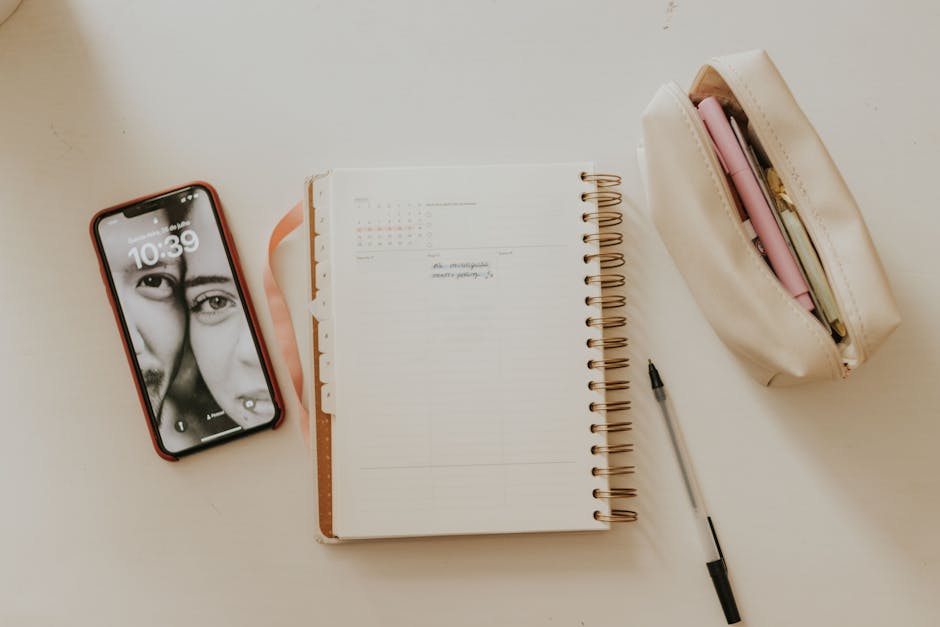
Pick one place. A shared Google Doc, a Notion page, a dedicated notebook — it almost doesn’t matter what it is, as long as you both have access and actually use it.
The document should have a few simple sections: decisions already made, things you’re still figuring out, vendors you’re considering, and a running list of things to follow up on. That last category is where most couples leak energy — the venue coordinator says they’ll send over a contract, and three weeks pass before anyone realizes they never got it.
Review the document together once a week, ideally on a consistent day. Even fifteen minutes is enough to make sure nothing is falling through the cracks and that you’re both operating from the same understanding of where things stand.
This practice — planning your week together with a clear shared list — is one of the simplest ways to reduce the ambient anxiety that comes with planning something this big.
Give Every Decision a Parking Spot
One of the quieter stressors of wedding planning is the mental load of holding half-made decisions in your head. You saw a florist whose work you loved, but you haven’t committed. You have three cake vendors to research, but haven’t started. Every open loop is a small weight.
The solution isn’t to make faster decisions. It’s to give every open decision a specific home and a specific date when you’ll come back to it.
Instead of “we need to figure out the flowers at some point,” you have “we’re looking at three florists by May 15th and choosing by June 1st.” That’s a closed loop. You don’t have to think about it until May 15th.
This is the same principle that makes any large project feel manageable: not doing everything at once, but knowing when everything will get done. If you’ve ever felt overwhelmed by a list that never seems to get shorter, it’s often because the list doesn’t have dates attached — just an undifferentiated pile of things that all feel equally pressing.
Give every open decision a place to live and a date to revisit it. Then leave it alone until then.

Build in Buffer — Especially in the Final Weeks
The last two months before a wedding have a way of getting very full very quickly. Final vendor payments come due. Guest RSVPs trickle in (or don’t). Alterations happen in multiple fittings. Family members start arriving with opinions and questions.
The couples who feel calm during this stretch almost always have the same thing in common: they did more of the logistics work earlier than they had to.
If something can be decided at six months, don’t save it for three. If a form can be submitted at ten weeks, don’t wait until eight. The buffer you build in the early phases is the calm you get to spend in the final stretch.
This applies to the day-of timeline too. Build in more time between events than you think you need. The ceremony runs long. Hair takes forty-five minutes more than expected. The family photo session is always an adventure. Every wedding day I’ve heard described had at least one moment where time took longer than planned — the couples who rolled with it were the ones who had space built in.
remember to Plan for the Day After
This is a genuinely overlooked part of wedding planning. The morning after your wedding, you will be tired in a specific way that is unlike ordinary tired. You’ve been running on adrenaline for days. You have family in from out of town. There’s probably a brunch to figure out, gifts to transport, a honeymoon to pack for, a venue to check out of.
Before the wedding, spend thirty minutes planning the 48 hours that follow it. Who is handling the gifts? Who is getting the cards? Is someone returning the rental items? When does the honeymoon transportation leave and from where?
These are small questions with easy answers — but only if you answer them before you’re exhausted and euphoric at the same time.
If you’re thinking about this kind of pre-event preparation, you’re already ahead of most people. The stuff that tends to fall apart isn’t the big visible decisions — it’s the small logistical handoffs that nobody claimed ownership of.
Let Some Things Be Imperfect on Purpose
There’s a version of wedding planning where every single element is researched, compared, and optimized until it’s exactly right. There’s another version where you make good-enough decisions quickly, save your energy for the things that actually matter to you, and trust that the day will be wonderful even if the napkin fold isn’t what you envisioned.
The second version tends to produce happier couples.
Every wedding has something that doesn’t go according to plan. The seating chart gets scrambled. It rains. A vendor cancels with two weeks notice. Someone gives a toast that goes eleven minutes longer than expected. The couples who enjoy their wedding day are rarely the ones who planned every variable into submission — they’re the ones who decided early on that the point was the marriage, and the wedding was a party to celebrate it.
Which things actually matter to you and your partner? Lean into those. Let the rest be fine.
The Things Most Planning Guides Don’t Tell You
A few honest notes that most wedding planning articles skip:
You will disagree with your partner. Often about things that feel small to one of you and significant to the other. This is not a sign that you’re wrong for each other — it’s a sign that you’re planning something that matters. Treat each disagreement as a conversation, not a debate to win.
Vendor communication takes longer than you expect. Build extra time into every follow-up. A week with no response to an email is normal. Two weeks, send a gentle follow-up. Three weeks, consider whether this vendor’s communication style is a preview of working with them.
Your taste will shift. You will fall in love with something at nine months out that you would have laughed at twelve months out. This is fine. As long as you haven’t signed a contract, you can change your mind. After the contract, find a way to love what you chose.
Other people will have opinions. This is unavoidable. The most useful question to ask when input arrives: does this person’s opinion need to affect a decision, or do I just need to thank them and move on?
Planning a wedding is a long project, but it’s not a complicated one when you break it into its natural pieces. The couples who arrive at their wedding day feeling calm didn’t do less — they just distributed the work sensibly, made decisions in order, and let themselves trust that the foundation they built would hold.
That’s really all this is: building a foundation, early, so the final stretch can feel like anticipation instead of scrambling.
If you’re using Composed to keep track of everything from venue tours to vendor follow-ups, its AI-generated prep lists can help make sure each appointment has the right context before you walk in — so vendor meetings feel less like you’re starting from scratch every time.
But whatever your system, the most important move is having one. Start there.
Planning a wedding is a long project, but it’s not a complicated one when you break it into its natural pieces. The couples who arrive at their wedding day feeling calm didn’t do less — they just distributed the work sensibly, made decisions in order, and let themselves trust that the foundation they built would hold.
That’s really all this is: building a foundation, early, so the final stretch can feel like anticipation instead of scrambling.
Pick a system — a shared Google Doc, a planning notebook, a dedicated app — and actually use it consistently with your partner. The tool matters far less than the habit. One weekly check-in, one shared list, and a parking spot for every open decision is more than enough to keep a wedding moving forward without chaos.
Planning a wedding is also, somehow, a warm-up for the kind of collaborative decision-making you’ll be doing for the rest of your lives together. Not a bad way to start.