There’s a specific kind of dread that starts about three days before a flight. It’s not just about the flying itself — it’s the accumulating pile of unknowns. Did I pack the right things? What time do I actually need to leave? What if the gate changes and I’m in the wrong terminal? What if, what if, what if.
If that sounds familiar, you’re not anxious because something is wrong with you. You’re anxious because flying involves an unusual density of things that are outside your control, compressed into a short window of time, with consequences that feel high-stakes. That’s a lot for any brain to hold.
The good news: most of the suffering happens before the flight, not during it. And most of that pre-flight suffering comes from uncertainty — not the flight itself. Which means a little preparation, done calmly, can take a surprising amount of weight off.
The Anxiety Is About the Unknown, Not the Airplane
Most people who describe themselves as people who “hate flying” don’t actually hate the part where they’re sitting in a seat 35,000 feet up. They hate the chaos leading up to it.
The frantic morning. The uncertainty about timing. Forgetting something important at home and not realizing until you’re through security. Arriving and not being sure which terminal, which gate, how long the line might be.
These aren’t irrational fears — they’re the natural result of trying to hold a complex sequence of events in your head, all at once, while also trying to live your normal life until the moment you need to leave.
The fix isn’t to care less. It’s to get all of that out of your head and somewhere more reliable before it has a chance to spiral.
If you’ve read anything about why planning apps often cause more anxiety than they solve, you’ll recognize this pattern: the problem isn’t that you need more reminders pinging at you. It’s that you need a clearer picture, earlier, so your nervous system can actually relax.
Start Earlier Than You Think You Need To
The single most effective thing you can do for a calmer travel day is to start your preparation earlier than feels necessary.
Not obsessively early. Not two weeks of color-coded spreadsheets. But a quiet 15-minute sit-down, two or three days before the flight, where you think through the whole journey from door to gate.
What does that look like in practice?
Think through the full sequence
Your travel day isn’t one event — it’s a chain of smaller ones. Getting up. Getting ready. Getting to the airport. Checking in. Security. Finding the gate. Boarding.
Each link in that chain has its own timing requirement. When you map them out in sequence, the chaos starts to look more like a manageable list. And manageable lists don’t trigger the same alarm response in your brain.
Try writing out every step you’ll need to take from waking up to sitting in your seat. Include things that seem obvious: charging your phone the night before, printing your boarding pass (if you still do that), confirming your bag fits carry-on dimensions. The obvious things are exactly the ones that get forgotten.
Work backwards from boarding, not forwards from waking up
Here’s something most people get wrong: they figure out what time they need to leave, then count forward to estimate if they have enough time. But working backwards is more reliable.
Your flight boards at 7:45 AM. You want to be at the gate by 7:15. That means through security by 7:00. That means checked in by 6:30. That means at the airport by 6:15. That means leaving your house by 5:30. That means waking up at 4:45.
That’s your answer. And it’s right there in black and white, not floating somewhere in the back of your mind making you nervous.
This is exactly the kind of thinking that Composed’s departure tracking feature is designed to support — working backwards from when you need to be somewhere, not just reminding you an hour before.
Build a Prep List Before You Pack
Packing is not the same as being prepared. You can have a perfectly packed bag and still show up at the airport without your passport, your medication, or the confirmation number for your hotel.
A prep list is different from a packing list. A packing list covers what goes in the bag. A prep list covers everything that needs to happen before you leave the house — including packing, but also everything else.
“The goal isn’t to remember everything yourself. The goal is to build a system that remembers for you.”
Some things that belong on a flight prep list, beyond the obvious:
- Download the airline app and check in
- Screenshot or save your boarding pass (don’t rely on having wifi at the airport)
- Confirm your seat assignment
- Check the weather at your destination
- Charge all devices the night before
- Leave a key with someone if you’ll be away for a few days
- Set a “leave by” time in your calendar, not just a “flight at” time
- Confirm how you’re getting to the airport — and whether that plan changes if it rains
The case for giving every event its own prep list goes deeper on this, but the short version is: having a list doesn’t mean you’re anxious. It means you’re free to stop being anxious, because the thinking is already done.
The Night Before Is the Most Important Moment
Most flight-day stress is manufactured the morning of the flight. You wake up, and the whole thing rushes at you at once.
What if you took that rush and moved it to the night before instead?
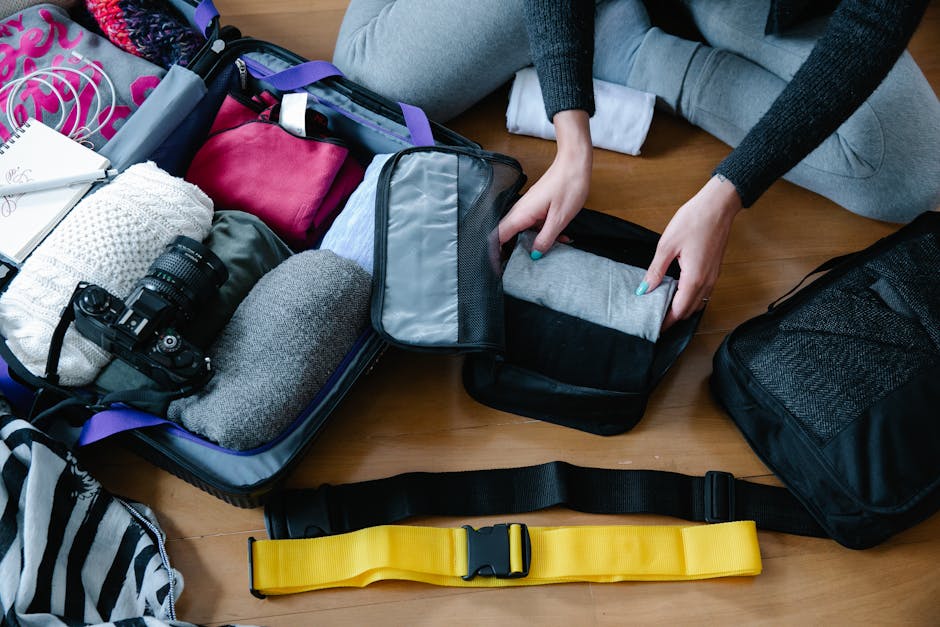
The night before your flight, try doing a complete mental walkthrough. Bags packed and by the door? Yes. Boarding pass accessible? Yes. Phone charged? Yes. Know exactly what time to leave and how you’re getting there? Yes.
When each of those gets a quiet yes, you can actually go to sleep. Not perfectly — sleep before a morning flight is never perfect — but better than if you’re lying there running through the list in your head for the fourth time.
There’s also something to be said for setting an intention the night before rather than waiting for the morning chaos. The principle is the same: preparation done the night before is worth twice as much as the same preparation done that morning, because you actually have the mental space to do it properly.
A note on buffer time
If you have any tendency toward anxiety, build in more buffer than you think you need.
Not infinite buffer. Not showing up four hours early out of fear. But an honest 20-30 minutes of padding beyond your calculated arrival time. Traffic is unpredictable. Security lines have moods. The shuttle from the parking lot takes longer than the app suggests.
Buffer time isn’t wasted time. It’s the physical space where your nervous system gets to exhale. A slow coffee at the gate, a few minutes of people-watching, arriving without having to run — that’s worth something.
At the Airport: Let the Plan Do the Work
You’ve done the preparation. You’re at the airport with a little time to spare. Now the job is to trust the plan and stop re-planning.
This is harder than it sounds. Anxious brains are good at finding new things to worry about: What if there’s a delay? What if the gate changes? What if I’m in the wrong terminal?
A few practical things that help:
Check the departures board once when you arrive, then again about 30 minutes before boarding. Not constantly. Constant checking doesn’t give you more information — it just keeps your nervous system activated.
Know your gate, but don’t obsess over it. Gates change sometimes. The airline will notify you. You don’t need to monitor this yourself every five minutes.
Have something for the wait. A book, a podcast, a playlist, a game on your phone. Not something that requires deep concentration, but something that gives your mind a gentle place to be. Sitting in silence with an anxious mind and a departures board is a bad combination.
And if something does go sideways — a delay, a gate change, a rebooking — notice that you’ve already handled everything you could control. The thing that went wrong is the one thing that was never in your hands.
For Frequent Flyers Who Still Find It Hard
There’s a common assumption that anxiety about flying gets better with frequency. Sometimes it does. Sometimes it doesn’t. Some people fly every month for work and still feel their heart rate climb when they step onto the jetway.
If that’s you, you’re not doing something wrong. The preparation strategies above still apply — maybe even more so, because you know the specific things that tend to go sideways for you. Lean into that knowledge.
Build your prep list around your actual points of failure, not a generic checklist. If you always forget to download your boarding pass offline, that goes at the top. If you always underestimate how long the security line is at your home airport on a Monday morning, that goes in your timing calculation.
Planning with anxiety is its own skill, and it’s worth treating it that way — building systems around your real patterns rather than the patterns you think you should have.
A Simpler Way to Think About All of This
Flying is stressful partly because it requires you to be in exactly the right place at exactly the right time, and the consequences of being wrong feel severe. That’s real.
But the vast majority of travel days go fine. The bag makes it. The flight departs. You land where you were supposed to land. The drama was mostly in the anticipation.
“Preparation isn’t about preventing everything from going wrong. It’s about giving yourself enough certainty that you can handle the things that do.”
When you’ve worked backwards from your boarding time, built your prep list two days ahead, done your walkthrough the night before, and arrived with a little buffer — you’ve done everything you can do. What’s left isn’t in your control, and you already knew that.
The goal isn’t a perfect travel day. It’s a calmer one.
If you want a calmer way to prepare for your next flight, Composed can help. Screenshot your flight confirmation and it extracts the details automatically. It calculates when you need to leave based on real travel time, auto-generates a prep checklist for your trip, and sends graduated reminders in a gentle tone — so you’re prepared without the panic.